Enabling Coupa Integration Across a Complex Multi-ERP Landscape
TWT connected Coupa's spend management platform to three separate ERP systems, replacing fragmented financial data with one consistent, enterprise-wide view of spend.

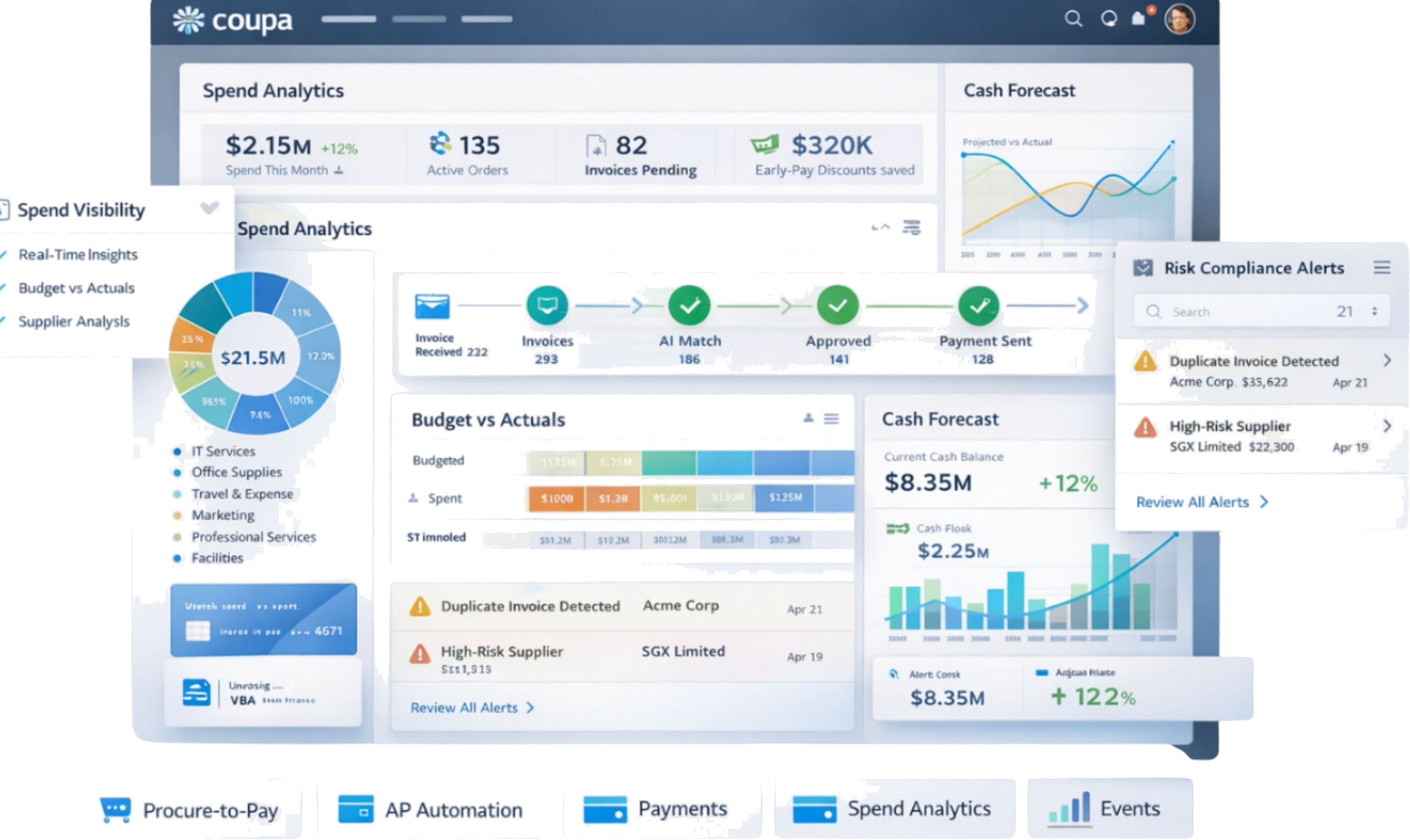
Coupa Spend Management Platform
A cloud-based spend management SaaS platform used to streamline procurement, invoicing, and expense management across large enterprises.
Project Overview
Integrating Coupa with a Multi-ERP Enterprise Landscape
The project focused on integrating the Coupa spend management platform with three distinct ERP systems to enable seamless data exchange, centralized spend control, and enterprise-ready financial operations.
- Designed a custom middleware-based integration architecture
- Integrated Coupa with three ERP systems
- Implemented bi-directional data synchronization
- Standardized data models across ERPs
- Eliminate ERP data silos
- Enable unified spend visibility
- Support scalable enterprise operations
- Reduce integration complexity
The integration was required to connect a modern SaaS spend platform with a fragmented ERP landscape while ensuring data consistency, accuracy, and operational continuity.

Challenges & Integration Approach
Delivering Scalable, Enterprise-Grade Integration
Integrating Coupa with multiple ERP systems required addressing differing data structures, integration standards, and business processes while minimizing disruption to ongoing financial operations.
- Multiple ERP systems with different data models
- Complex financial and procurement workflows
- Maintaining data accuracy across systems
- Avoiding point-to-point integration complexity
- Conducted detailed ERP and data-flow analysis
- Designed a custom middleware integration layer
- Implemented secure API-based integrations
- Executed controlled testing and validation

Results & Strategic Impact
The successful integration delivered a stable, scalable, and future-ready spend management solution that unified data across ERP systems and improved enterprise-wide financial visibility.
Have a similar SAP integration challenge?
Connect your enterprise systems with a strategy built around your existing SAP environment.
Schedule a Strategy Session →